
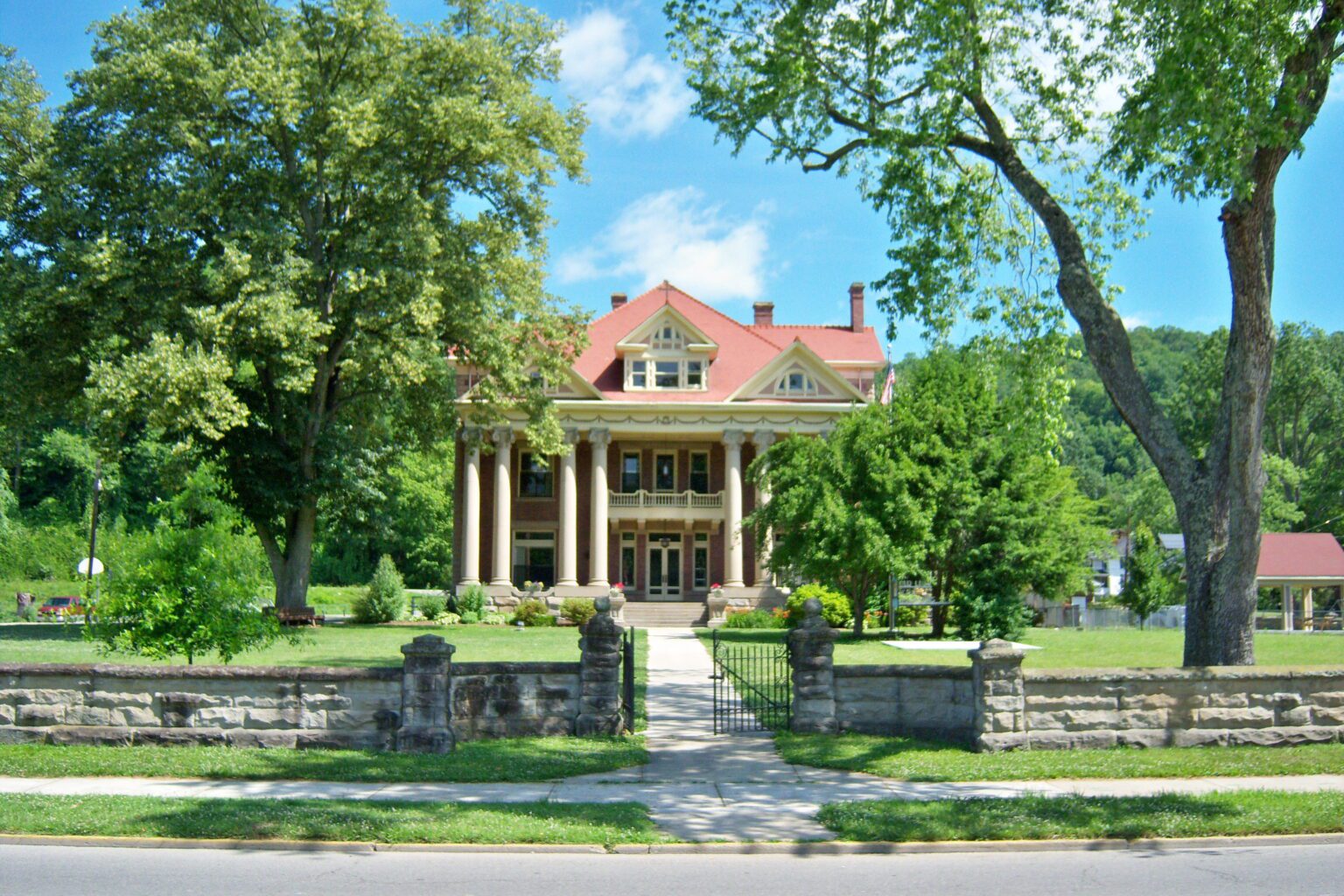
Mayo Mansion: A Window Into Paintsville’s Early Leadership
The Mayo Mansion, located along Main Street in Paintsville, reflects a period when the city was emerging as a center of leadership and civic life in Eastern Kentucky. Built in the early 20th century, the home is closely associated with John C. C. Mayo, a prominent attorney, industrialist, and political figure whose influence extended well beyond the region.
The mansion’s size and design reflected Mayo’s role in shaping Paintsville’s growth during a time of economic expansion. Today, it stands as a reminder of the individuals who helped guide the city’s development and the architectural styles that defined the era. While the mansion has taken on different roles over time, its presence remains an important part of Paintsville’s historical landscape.

Mayo Memorial United Methodist Church: Faith, Craftsmanship, and Community
Just a short distance from the Mayo Mansion stands Mayo Memorial United Methodist Church, one of Paintsville’s most recognizable historic buildings. Constructed in the early 1900s, the church was built as a memorial to Elizabeth Stewart Mayo, reflecting both personal remembrance and a broader commitment to faith and community.
Known for its stone construction, stained glass windows, and distinctive architecture, the church has long served as a place of worship and gathering in Paintsville. Beyond its religious significance, Mayo Memorial represents the role churches played as anchors of community life — places where generations marked milestones, shared support, and came together in times of change.
Why These Landmarks Matter
Together, the Mayo Mansion and Mayo Memorial United Methodist Church offer insight into Paintsville’s early 20th-century history — one shaped by leadership, faith, and community investment. They stand as reminders that the city’s story was built not only through industry and commerce, but through institutions that influenced daily life and long-term growth.
Both sites continue to contribute to Paintsville’s sense of place, connecting the present to the people and values that helped shape the city.